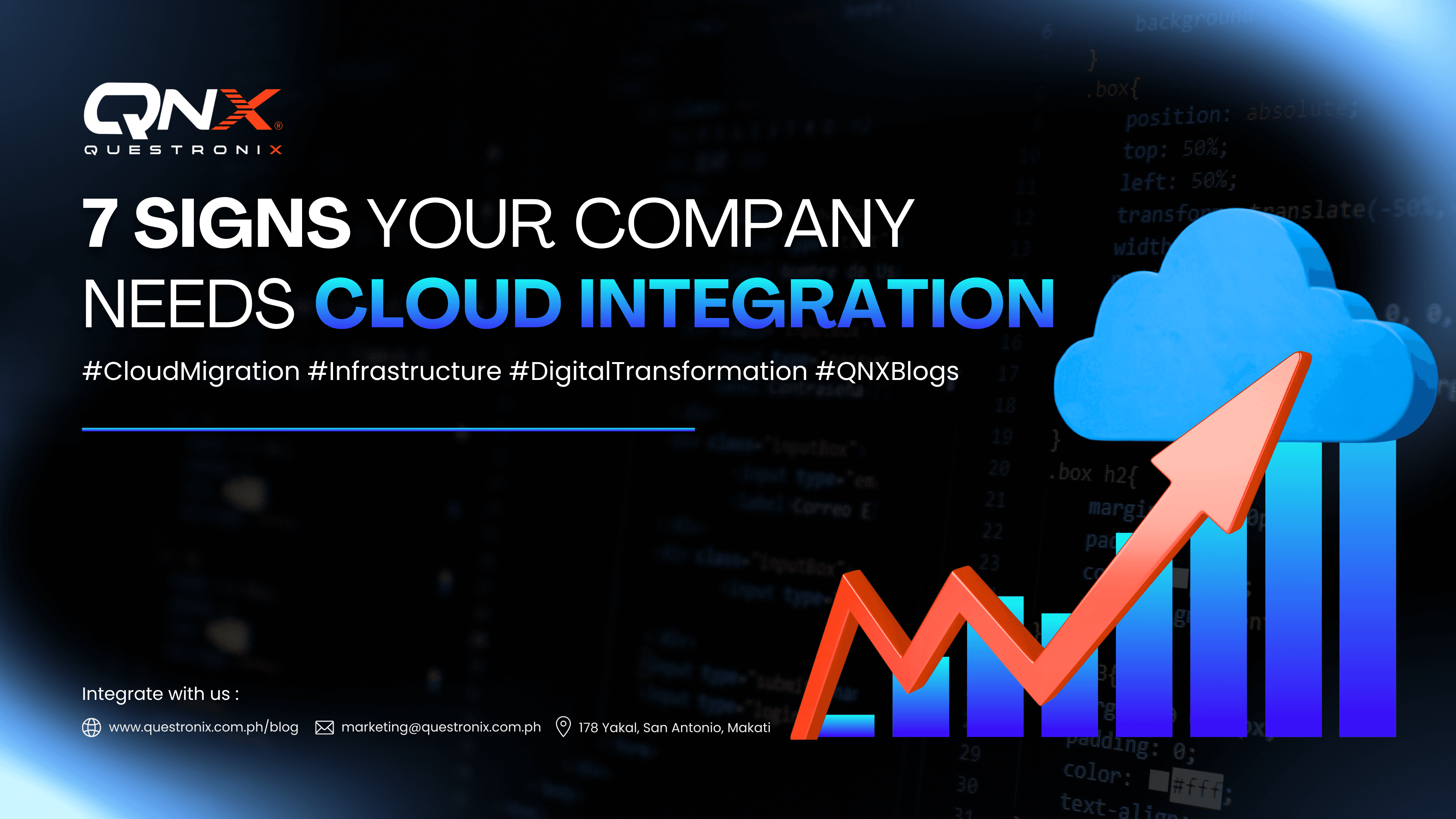
Most businesses don’t realize they need cloud integration until the inefficiencies become impossible to ignore. Here’s how to spot the problem before it gets worse.
1. Your Teams Are Doing Manual Data Entry
If employees are copying data from one system to another by hand, exporting spreadsheets, or re-entering figures across platforms, your systems aren't working together. This wastes time and introduces errors that compound over time. Cloud integration automates data movement between platforms so your team isn't doing the job your software should be doing.
2. Departments Are Working from Different Data
When sales, finance, and operations are all looking at different versions of the same information, decisions are made using inaccurate data. This is usually a systems issue caused by disconnected tools that create information gaps and slow down the business, leading to avoidable mistakes. Cloud integration gives every team access to the same accurate, up-to-date information.
3. Growth Requires a System Overhaul Every Time
If adding a new team, market, or product line consistently breaks your existing setup, your infrastructure isn't built to scale. You shouldn't have to rebuild processes from scratch every time the business grows. The cloud gives you the flexibility to expand without starting over.
4. Your Tools Don't Share Data
You may be running a CRM, a project management tool, an accounting platform, and a support system, yet none of them communicate automatically. Your team ends up bridging the gaps manually. Connecting these tools through cloud integration eliminates redundant work and reduces the risk of things falling through the cracks.
5. Reporting Is Slow and Inconsistent
If producing a report requires someone to pull data from multiple sources, clean it, and compile everything manually, decision-makers are always working with outdated information by the time the report is ready. Cloud integration consolidates your data, making reports more accurate and readily available without manual effort.
6. Remote Teams Have Limited Access
If your systems rely heavily on on-premise infrastructure, employees outside the office are at a disadvantage. They either can’t access what they need or are forced to use workarounds that create security and consistency risks. Cloud systems make the same tools and data accessible to everyone, regardless of location.
7. Compliance and Audit Preparation Takes Weeks
If preparing for a compliance review or audit means digging through multiple siloed systems, chasing different teams for records, and reconciling inconsistencies endlessly, your infrastructure is making the process far more difficult than it should be. Cloud migration centralizes your data and creates consistent audit trails, so when a review comes up, the information is already organized and accessible.
Most businesses don’t realize they need cloud integration until the inefficiencies become impossible to ignore. Here’s how to spot the problem before it gets worse.
1. Your Teams Are Doing Manual Data Entry
If employees are copying data from one system to another by hand, exporting spreadsheets, or re-entering figures across platforms, your systems aren't working together. This wastes time and introduces errors that compound over time. Cloud integration automates data movement between platforms so your team isn't doing the job your software should be doing.
2. Departments Are Working from Different Data
When sales, finance, and operations are all looking at different versions of the same information, decisions are made using inaccurate data. This is usually a systems issue caused by disconnected tools that create information gaps and slow down the business, leading to avoidable mistakes. Cloud integration gives every team access to the same accurate, up-to-date information.
3. Growth Requires a System Overhaul Every Time
If adding a new team, market, or product line consistently breaks your existing setup, your infrastructure isn't built to scale. You shouldn't have to rebuild processes from scratch every time the business grows. The cloud gives you the flexibility to expand without starting over.
4. Your Tools Don't Share Data
You may be running a CRM, a project management tool, an accounting platform, and a support system, yet none of them communicate automatically. Your team ends up bridging the gaps manually. Connecting these tools through cloud integration eliminates redundant work and reduces the risk of things falling through the cracks.
5. Reporting Is Slow and Inconsistent
If producing a report requires someone to pull data from multiple sources, clean it, and compile everything manually, decision-makers are always working with outdated information by the time the report is ready. Cloud integration consolidates your data, making reports more accurate and readily available without manual effort.
6. Remote Teams Have Limited Access
If your systems rely heavily on on-premise infrastructure, employees outside the office are at a disadvantage. They either can’t access what they need or are forced to use workarounds that create security and consistency risks. Cloud systems make the same tools and data accessible to everyone, regardless of location.
7. Compliance and Audit Preparation Takes Weeks
If preparing for a compliance review or audit means digging through multiple siloed systems, chasing different teams for records, and reconciling inconsistencies endlessly, your infrastructure is making the process far more difficult than it should be. Cloud migration centralizes your data and creates consistent audit trails, so when a review comes up, the information is already organized and accessible.
How can we help?
How can we help?
How can we help?
Empowering Your Business with Cutting-Edge Digital Solutions.
Empowering Your Business with Cutting-Edge Digital Solutions.
Empowering Your Business with Cutting-Edge Digital Solutions.

Quick Links
Quick Links