

QNX Does the Binondo Food WOK with Ivan Man Dy
In celebration of the Lunar New Year and to welcome the Year of the Fire Horse, QNX took to the vibrant streets of Binondo (apparently the oldest Chinatown in the world), guided by Ivan Man Dy who is a true authority in Manila history. The tour started by the iconic arches along Ongpin Street where we learned about Binondo’s origins, its centuries-old history, and the prominent figures who trace their roots to this dynamic district.
A Humble Yet Heroic Start
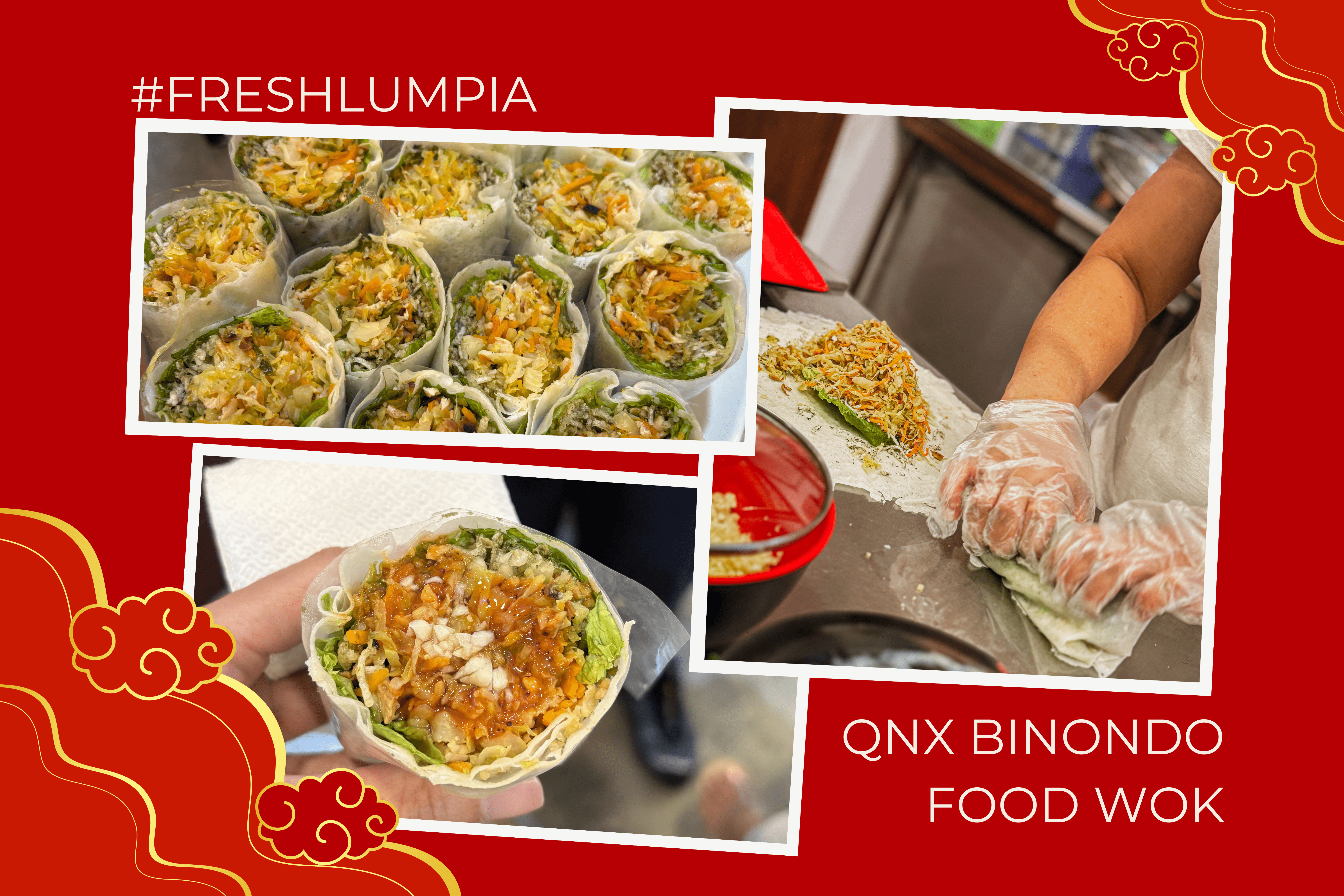
Our first stop: Lumpia, simple and surprisingly wholesome, humble as it seems but behind its appearance hides a complex procedure. Fresh vegetables are chopped and cooked just right to enhance their natural textures and flavors. Peanuts are ground for a nutty crunch that deepens the wok hei in every bite. Everything is wrapped in a soft, delicate skin that holds it all together. A drizzle of sauce on top ties the flavors into one perfect mouthful.
It was the perfect way to kick off the day.
Right outside the shop, a vibrant dragon and tiger dance brought the streets to life—drums pounding, colors flashing, the crowd buzzing with excitement. With the energy still in the air, we headed further into the district.
Faith, Foundations, and Flavor
As we walked, a question came up: Did the Spanish help shape this Chinese community? According to Ivan, the answer is yes. When the Spanish arrived, they aimed to spread Christianity, including among Chinese migrants. These migrants were settled in the extramuros—outside the walls of Intramuros. A church was built at the center of the settlement, laying the foundation for what we now know as Binondo.
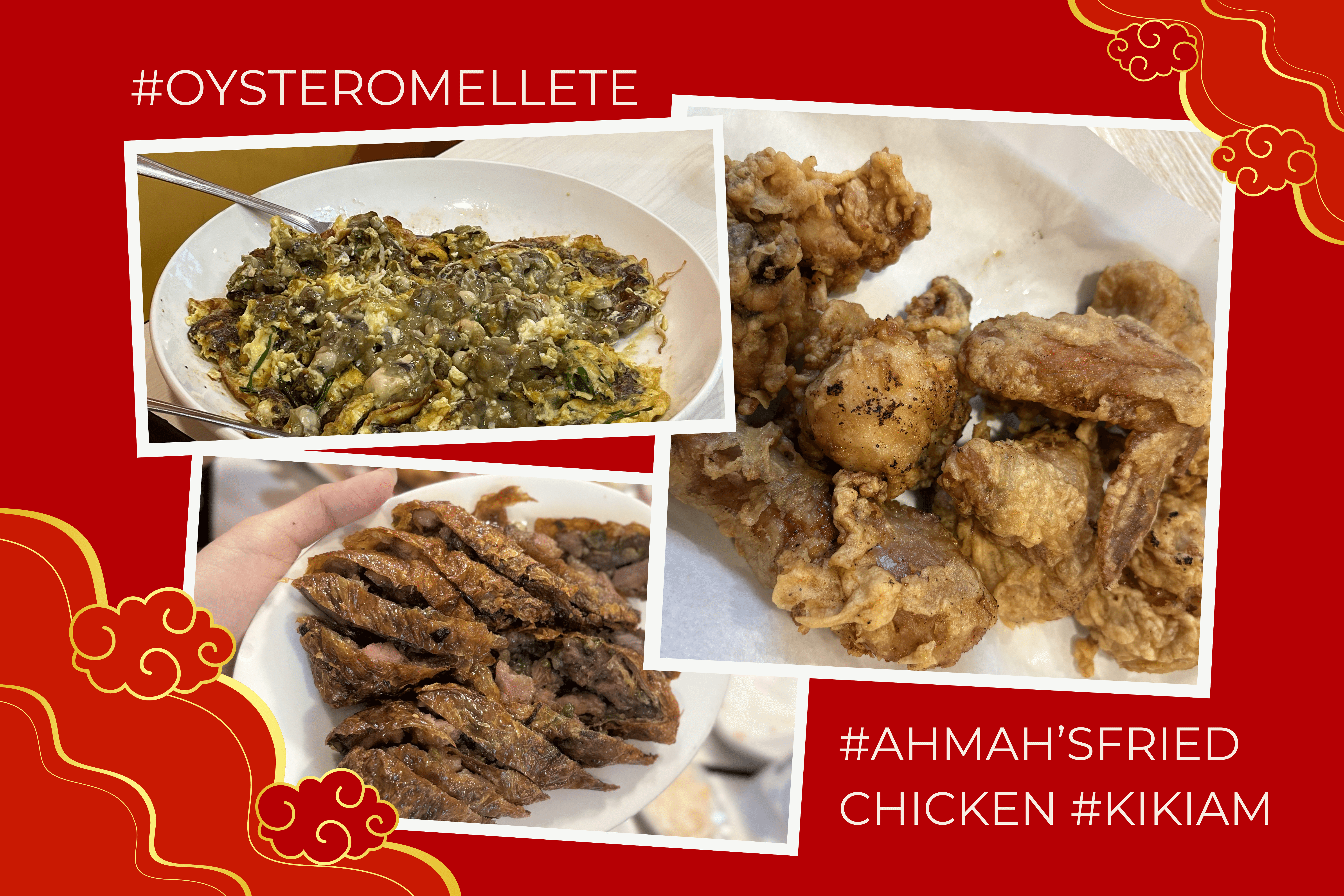
Our “true” breakfast awaited us next, at a restaurant perched atop the building where Serenity is located. Three superstar dishes were served: Oyster Omelette, Kikiam, and Amma’s Fried Chicken.
Then it was time for our “real” breakfast, at the top floor of Serenity. Three-star-dishes hit the table: oyster omelette, kikiam, and ah mah’s fried chicken.
Oysters for breakfast? Yes, please. The oyster omelette looked simple but delivered big on flavor. The oysters’ briny sweetness blended perfectly with soft, savory eggs. It also had the strongest wok hei of the three—bold, smoky, and truly unforgettable.
Next was the kikiam. Crisp on the outside, chewy and very savory inside. Each bite cracked through the golden shell into a rich, savory filling that practically melted in your mouth.
And finally, ah mah’s fried chicken. Golden, crispy, and packed with familiar Chinese spices; it tasted like pure nostalgia—the kind of fried chicken many of us grew up loving.
By now, we were completely stuffed… and we still had two more stops ahead.
Dumplings and Decisions

We moved through the busiest stretch of Ongpin, weaving past tiny roadside stalls and long lines of tourists eager to taste Binondo’s famous food scene.
Our next stop went beyond the usual siomai, siopao, and xiao long bao. Instead, we tried two hearty, bun-style baos—one stuffed with meat and kuchay (chives), the other with meat and mustasa (mustard greens).
The kuchay version had a mild garlicky flavor with a fresh, onion-like aroma, while the mustasa brought a slightly bitter, tangy, peppery kick that cut through the richness of the meat.
Picking a favorite wasn’t easy as they were both excellent. But if I had to choose, I’d go with the mustasa.
A Sweet Farewell

Before our final stop, some wandered off to grab extra treats—matcha ice cream, more dumplings, and sugarcane juice from a stall with perpetually long lines.
A special line had been set aside for us, giving the group first dibs on the photobooth and a head start on stocking up on favorites like tikoy, hopia, and mochi. We didn’t have to guess what to buy as free samples made sure everyone found something they loved.
One standout quickly stole the spotlight: the pistachio-filled chocolate mochi, a rich, nutty treat that reminded us of last year’s viral Dubai chocolate trend.
Soon, boxes were packed, bags were full, and everyone left with something sweet in hand—and a little extra happiness, too.
Closing Reflections
Alas, every journey must come to an end. As we left the busy streets of Binondo, we carried more than full stomachs and bags of treats. We brought home stories: of a heritage shaped by migration and faith, of recipes refined through generations, and of a community that thrives where cultures meet.
In welcoming the Year of the Fire Horse, we did more than celebrate. We stepped into history, honored tradition, and rediscovered the simple joy of sharing a meal.
Perhaps that’s what the new year is really about: remembering our roots, appreciating the present, and moving forward together—full, grateful, and ready for what comes next.
QNX Does the Binondo Food WOK with Ivan Man Dy
In celebration of the Lunar New Year and to welcome the Year of the Fire Horse, QNX took to the vibrant streets of Binondo (apparently the oldest Chinatown in the world), guided by Ivan Man Dy who is a true authority in Manila history. The tour started by the iconic arches along Ongpin Street where we learned about Binondo’s origins, its centuries-old history, and the prominent figures who trace their roots to this dynamic district.
A Humble Yet Heroic Start
Our first stop: Lumpia, simple and surprisingly wholesome, humble as it seems but behind its appearance hides a complex procedure. Fresh vegetables are chopped and cooked just right to enhance their natural textures and flavors. Peanuts are ground for a nutty crunch that deepens the wok hei in every bite. Everything is wrapped in a soft, delicate skin that holds it all together. A drizzle of sauce on top ties the flavors into one perfect mouthful.
It was the perfect way to kick off the day.
Right outside the shop, a vibrant dragon and tiger dance brought the streets to life—drums pounding, colors flashing, the crowd buzzing with excitement. With the energy still in the air, we headed further into the district.
Faith, Foundations, and Flavor
As we walked, a question came up: Did the Spanish help shape this Chinese community? According to Ivan, the answer is yes. When the Spanish arrived, they aimed to spread Christianity, including among Chinese migrants. These migrants were settled in the extramuros—outside the walls of Intramuros. A church was built at the center of the settlement, laying the foundation for what we now know as Binondo.
Our “true” breakfast awaited us next, at a restaurant perched atop the building where Serenity is located. Three superstar dishes were served: Oyster Omelette, Kikiam, and Amma’s Fried Chicken.
Then it was time for our “real” breakfast, at the top floor of Serenity. Three-star-dishes hit the table: oyster omelette, kikiam, and ah mah’s fried chicken.
Oysters for breakfast? Yes, please. The oyster omelette looked simple but delivered big on flavor. The oysters’ briny sweetness blended perfectly with soft, savory eggs. It also had the strongest wok hei of the three—bold, smoky, and truly unforgettable.
Next was the kikiam. Crisp on the outside, chewy and very savory inside. Each bite cracked through the golden shell into a rich, savory filling that practically melted in your mouth.
And finally, ah mah’s fried chicken. Golden, crispy, and packed with familiar Chinese spices; it tasted like pure nostalgia—the kind of fried chicken many of us grew up loving.
By now, we were completely stuffed… and we still had two more stops ahead.
Dumplings and Decisions
We moved through the busiest stretch of Ongpin, weaving past tiny roadside stalls and long lines of tourists eager to taste Binondo’s famous food scene.
Our next stop went beyond the usual siomai, siopao, and xiao long bao. Instead, we tried two hearty, bun-style baos—one stuffed with meat and kuchay (chives), the other with meat and mustasa (mustard greens).
The kuchay version had a mild garlicky flavor with a fresh, onion-like aroma, while the mustasa brought a slightly bitter, tangy, peppery kick that cut through the richness of the meat.
Picking a favorite wasn’t easy as they were both excellent. But if I had to choose, I’d go with the mustasa.
A Sweet Farewell
Before our final stop, some wandered off to grab extra treats—matcha ice cream, more dumplings, and sugarcane juice from a stall with perpetually long lines.
A special line had been set aside for us, giving the group first dibs on the photobooth and a head start on stocking up on favorites like tikoy, hopia, and mochi. We didn’t have to guess what to buy as free samples made sure everyone found something they loved.
One standout quickly stole the spotlight: the pistachio-filled chocolate mochi, a rich, nutty treat that reminded us of last year’s viral Dubai chocolate trend.
Soon, boxes were packed, bags were full, and everyone left with something sweet in hand—and a little extra happiness, too.
Closing Reflections
Alas, every journey must come to an end. As we left the busy streets of Binondo, we carried more than full stomachs and bags of treats. We brought home stories: of a heritage shaped by migration and faith, of recipes refined through generations, and of a community that thrives where cultures meet.
In welcoming the Year of the Fire Horse, we did more than celebrate. We stepped into history, honored tradition, and rediscovered the simple joy of sharing a meal.
Perhaps that’s what the new year is really about: remembering our roots, appreciating the present, and moving forward together—full, grateful, and ready for what comes next.
How can we help?
How can we help?
How can we help?
Empowering Your Business with Cutting-Edge Digital Solutions.
Empowering Your Business with Cutting-Edge Digital Solutions.
Empowering Your Business with Cutting-Edge Digital Solutions.


Quick Links
Quick Links